

CARIBBEAN SAFETY AND SECURITY NET
REPORTED YACHT CRIME – CARIBBEAN REGION
CSSN ANNUAL REPORT 2025 of Yacht Crime in the Caribbean
Introduction
Overview
In 2025, reported incidents of crimes against yachts in the Caribbean totaled 124, a 14% decrease from the record high of 145 incidents reported in 2024. This moderation follows a year of unprecedented activity and signals a return toward the five-year average of 119 incidents. Violent crimes continued their encouraging decline, falling to 7 incidents (from 8 in 2024).
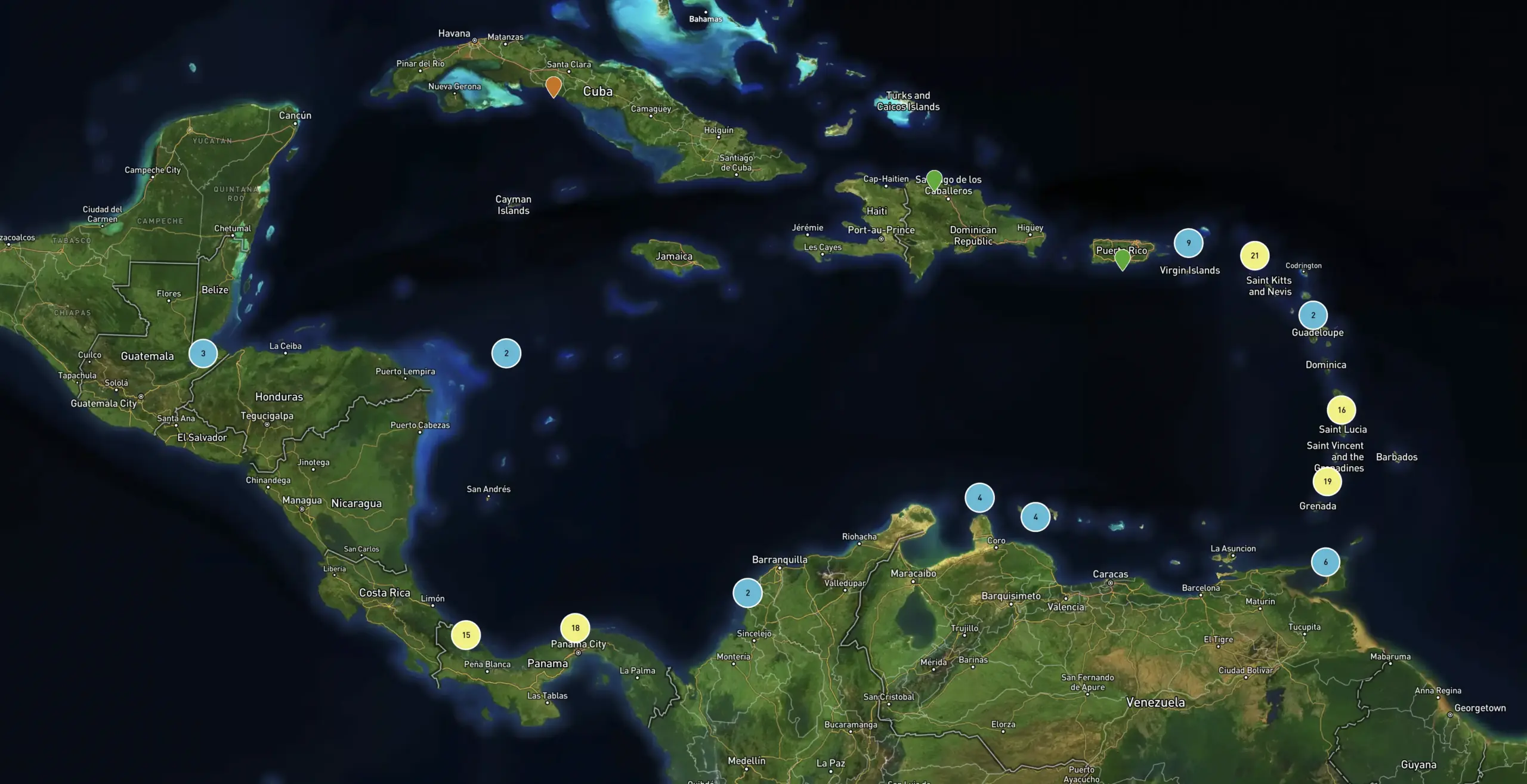
Geographic concentration was a defining characteristic of 2025. On a positive note, the British Virgin Islands (BVI) saw a dramatic decline from 20 incidents to 4. Offsetting this improvement, Panama emerged as the most active country in the region, with all-time region-wide record high activity of 33 reports, a 200% increase from 11 in 2024. Activity in Panama was concentrated in the Bocas del Toro archipelago, and the Linton Bay area. Activity in French Saint Martin increased modestly (from 13 to 15 incidents), remaining elevated; however, the nature of the activity shifted. St. Vincent and the Grenadines trended upward (from 7 to 12 incidents) as cruising patterns normalized during the continued recovery from Hurricane Beryl.
The technical enhancements to our website and the revised format introduced in the 2024 Annual Report were very well received. We have continued to refine and expand these features in this year’s report. The embedded charts are interactive and can be toggled to customize, and links to customized country specific maps are also provided.
CSSN continues to deliver indispensable risk-planning information to our community. First-hand, volunteer-vetted reports form the backbone of our centralized, publicly accessible database, providing cruisers with timely, accurate information about how and where they cruise.
Safety and security is a shared responsibility and we rely on community awareness and reporting for everyone's benefit. We encourage you to read and share this Annual Report and to prominently acknowledge the Caribbean Safety and Security Net (CSSN) as your source when distributing our graphics, links, and content.
Year Overview
Incident Overview for 2025
Geographic Distribution
Colombia & Central America (Most Active Region - 40 incidents, 33% of total)
Panama emerged as the most active country in 2025, recording 33 incidents, a 200% increase from 11 in 2024, and the highest annual total ever recorded by any country in the region. Activity was sustained throughout the year, with incidents reported in every month. Notably, all 33 reported incidents in 2025 were property crimes; no violent crimes were reported. The overwhelming pattern was opportunistic dinghy and outboard theft.
Within Panama, two areas accounted for the majority of incidents: Bocas del Toro, with 15 incidents across multiple anchorages, including South Anchorage (5), Red Frog (3), and North Anchorage (2); and Linton Bay, with 12 incidents in the main anchorage (10), Village Dock (1), the marina (1), and one in nearby Isla Grande.
Guatemala recorded 3 incidents (down 50% from 6 in 2024), all theft-related. Honduras saw just 2 incidents (down 78% from 9), both offshore (attempted piracy and suspicious activity). Colombia had 2 incidents, up from 1 in 2024.
Southern Windward Islands (25 incidents, 20% of total)
Saint Vincent and the Grenadines recorded 12 incidents (up 71% from 7), distributed across multiple islands: Bequia (5 incidents including 1 assault at Admiralty Bay), Canouan (2), and single incidents at Mayreau, Mustique, and mainland St. Vincent anchorages. SVG recorded 2 of the year's 7 violent crimes.
Grenada reported 7 incidents (down 59% from 17), with improvements across nearly all anchorages. The single violent crime was a robbery at Clarke's Court Bay in October. Tyrrel Bay, Carriacou (2 thefts) was the only location with multiple incidents.
Trinidad and Tobago saw 6 incidents (up 200% from 2), with 5 in Chaguaramas (all property crimes) and 1 assault at Mt. Irvine Bay in Tobago.
Leeward Islands (23 incidents, 19% of total)
Saint Martin (France) reported 15 incidents, up 15% from 13 in 2024. The most significant development was a burglary cluster in the lagoon area: 9 of 15 incidents occurred in the lagoon, including 5 burglaries at Witch's Tit anchorage between July and September—all targeting unoccupied yachts during hurricane season. This pattern of forced entry, full ransacking, including the theft of batteries, electronics, and stored outboards represents a concerning shift from opportunistic theft to targeted break-ins. Marigot Bay (3 incidents) and Oyster Pond (2) saw the remaining activity.
Sint Maarten (Netherlands) had 5 reported incidents (down 58% from 12), all in the Simpson Bay/lagoon area.
Northern Windward Islands (16 incidents, 13% of total)
Martinique recorded 11 incidents (down 15% from 13). Le Marin (4 incidents including 1 burglary) and Anse Mitan (3 thefts) were the primary hotspots, with Fort de France, Grand Anse D'Arlet, St. Anne, and St. Pierre each recording single incidents.
Saint Lucia had 5 incidents (down 55% from 11), with Rodney Bay accounting for 3 (down from 6 in 2024).
Five-Year Incident Trend
5-Year Average Analysis
The overall five year trend has become reasonably stable but generally upward. Violent crimes may also have stabilized with a welcomed downward slope in the last 2 years.
Incident Types Distribution 2025
Monthly Incident Distribution 2025
Analysis 2025
2025 Yacht Crime Incident Type Analysis
Theft dominated the 2025 yacht crime landscape, accounting for 90 of 124 incidents (72.5%). Combined with attempted theft (11 incidents), property theft represented 81.5% of all crimes. Consistent with historical patterns, Caribbean yacht crime remains overwhelmingly opportunistic rather than confrontational, with dinghies/outboards the most common target of thieves.
Burglary held steady at 12 incidents (9.8%), nearly unchanged from 2024's 11. However, the nature of burglaries shifted dramatically: 6 of 12 burglaries occurred in Saint Martin's lagoon, concentrated at Witch's Tit anchorage during hurricane season and targeting unoccupied yachts left on moorings.
Violent crimes declined modestly, totaling 7 incidents (5.7%). These were geographically dispersed across the Eastern Caribbean and offshore Honduras and included 3 assaults, 1 robbery, 1 attempted robbery, 1 attempted piracy, and 1 piracy-related suspicious activity report. This represents a continued overall decline from the 2023 peak of 16 violent incidents (when 10 assaults were recorded), and marks the second consecutive year below 10 violent incidents.
Countries with Most Incidents 2025
Concentration Analysis 2025
Significant geographic concentration was a defining characteristic of the 2025 reported Caribbean yacht crime landscape.
Two of Panama's most popular cruising areas, Bocas del Toro and Linton Bay, together recorded 28 incidents, representing 23% of all reported Caribbean yacht crime and 85% of Panama's total. In most cases, thieves targeted inadequately secured dinghies and equipment.
Bocas del Toro area (15 reported incidents)
In Bocas del Toro, July was the peak month, and outboard engines were the primary target. In several cases, dinghies or pangas were stolen and later recovered without their engines. This pattern indicates deliberate targeting of motors rather than the vessels themselves and suggests a broader pattern of criminal activity in the area. Notably, no lifted and locked dinghies were stolen from occupied yachts.
Linton Bay Area (13 reported incidents)
Linton Bay emerged as a persistent hotspot with incidents spanning January through December.
The pattern of activity in and near Linton Bay reveals both opportunistic and organized elements. In July, two incidents occurred on the same night: one dinghy was stolen while a chain lock thwarted thieves at a neighboring yacht. Reports consistently describe thieves operating between midnight and dawn while owners slept onboard, typically cutting painters on unsecured dinghies left in the water. No lifted and locked dinghies were stolen from occupied yachts.
Four-Year Perspective
Some locations show persistent problems across the 2022-2025 period.
Incidents in Bocas del Toro are escalating. Linton Bay's dramatic surge from 2 incidents in 2024 to 13 in 2025, a 550% increase, represents the year's most significant single-location deterioration. The combined Saint Martin/Sint Maarten lagoon area remains active and volatile, suggesting structural security issues. Trinidad and Tobago is volatile, and activity in Le Marin is fairly high but may be stabilizing.
| Location | 2022 | 2023 | 2024 | 2025 | Trend |
|---|---|---|---|---|---|
| Bocas del Toro, Panama | 4 | 7 | 7 | 15 | Escalating |
| Linton Bay, Panama | 4 | 1 | 2 | 13 | 2025 surge |
| St. Martin Lagoon | 2 | 2 | 5 | 9 | Escalating |
| Simpson Bay Lagoon | 4 | 0 | 10 | 2 | Volatile |
| Trinidad/Tobago | 2 | 9 | 2 | 6 | Volatile |
| Le Marin, Martinique | 5 | 1 | 6 | 4 | Stable |
Summary and Best Practices
Dinghy and outboard theft continue to account for the majority of all successful thefts, occurring most often when dinghies are poorly secured or not secured at all. The consistent use of robust physical security measures—heavy-duty cable locks, heavy-gauge stainless chain, and most importantly, lifting and locking dinghies overnight—demonstrably reduces risk. Removing/securing desirable items from the deck/cockpit removes temptation and reduces risk. Perimeter alarms, both light and sound, startle and discourage sneak thieves. Securing companionways/doorways and hatches overnight provides additional protection for crew.
Unoccupied yachts at anchor for extended periods present attractive targets for burglars. Loud intrusion alarms, surveillance systems, and regular patrols, combined with vigilant neighbors, remain the most effective deterrents.
The dedicated CSSN team remains focused on supporting the cruising community by providing the essential infrastructure for incident reporting, data consolidation, archiving, and dissemination. We continue to make this data freely available in multiple, customizable formats. Use the CSSN website resources regularly, and discuss and share CSSN's valuable information with everyone onboard. Make informed choices.
CSSN remains an all-volunteer, independent, self-funded team. Safety and security are a shared responsibility. We commit considerable amounts of our time, and it takes only a small amount of yours to keep everyone well and fully informed. If you are a victim, it's easy and important to make a timely CSSN incident report.
We sincerely thank everyone who filed reports and those who supported them. We also appreciate our valued information-sharing partners—Noonsite, Noforeignland, the Seven Seas Cruising Association (SSCA), and Boatwatch—each of which supports and complements our important mission. Finally, we are grateful to the talented, dedicated volunteers who make all of this possible.
Encourage your friends to subscribe to free CSSN Alerts, join our Telegram channel, enable third-party CSSN data in the Noforeignland app, or follow us on social media. Explore the many new and helpful resources available on our website and make CSSN a permanent part of your risk assessment and cruise planning process.
With your valued input CSSN informs, and captains decide.
KNOW BEFORE YOU GO!
We always welcome your feedback and suggestions, simply click the Contact Us link on any page of the CSSN website.
Safe Cruising,
Kim White and the all-volunteer CSSN team